
Building a home in Alaska comes with unique opportunities—and unique challenges that don’t exist in most parts of the United States. One of the most critical factors that affects residential construction in Alaska is permafrost. Whether you are planning a custom home in Anchorage, Fairbanks, or a more remote region, understanding how permafrost impacts home design and construction is essential for long-term stability, safety, and performance.
This guide explains what permafrost is, how it affects residential construction, and what homeowners need to consider when designing a home in Alaska. If you’re researching Alaska home construction, this is foundational knowledge that will help you make informed decisions before breaking ground.
What Is Permafrost and Why It Matters for Home Construction
 Permafrost is ground that remains frozen for at least two consecutive years. In many parts of Alaska, permafrost extends deep below the surface and can vary significantly from one property to another—even within the same neighborhood.
From a construction perspective, permafrost is not simply “frozen soil.” It is a dynamic ground condition that reacts to temperature changes, moisture levels, and human activity. When disturbed or improperly managed, permafrost can thaw unevenly, leading to ground movement that affects a home’s structural integrity.
This is why permafrost home construction requires specialized planning, experienced builders, and site-specific design strategies.
Where Permafrost Is Found in Alaska
Permafrost is widespread across Alaska, but its depth and stability vary by region.
- Interior Alaska (including Fairbanks) has extensive, continuous permafrost
- Southcentral Alaska often has discontinuous or isolated permafrost
- Coastal and southern regions may have minimal or no permafrost, depending on elevation and soil conditions
Because permafrost distribution is not uniform, site evaluation is critical. Two adjacent lots can have entirely different subsurface conditions, which is why professional assessment is always the first step in Alaska home building.
How Permafrost Affects Residential Construction
Building on permafrost is less about fighting nature and more about working with it intelligently. The biggest risk comes from thawing, which can cause:
- Uneven settling
- Foundation shifting
- Cracked walls and floors
- Structural misalignment over time
These issues are rarely the result of permafrost alone—they usually stem from design decisions that fail to account for ground conditions. Proper planning significantly reduces these risks.
Foundation Strategies Used for Homes Built on Permafrost
Foundation design is one of the most important aspects of Alaska home construction. Homes built on permafrost typically use foundation systems designed to minimize heat transfer and ground disturbance, helping maintain long-term stability.
Common Foundation Approaches in Permafrost Regions
Elevated Foundations
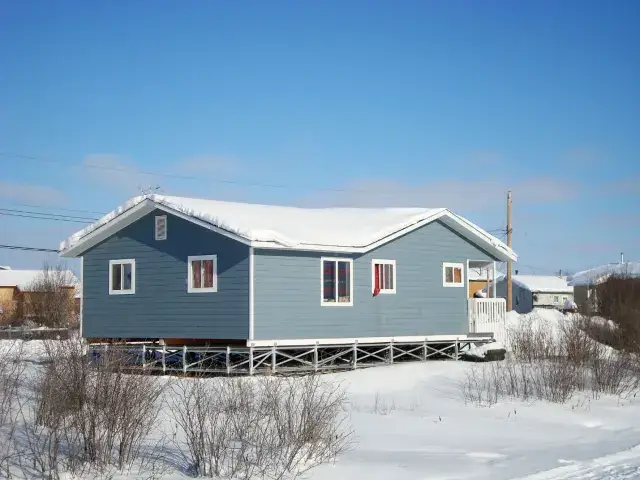
Raising the home above ground allows air circulation beneath the structure, reducing the chance of thawing. This approach is common in areas with continuous permafrost.
Pile or Post Foundations
Deep piles extend below the active layer of soil into more stable ground. This method transfers the load of the home to deeper, more reliable layers.
Adjustable Foundation Systems
Some modern designs incorporate systems that allow for minor adjustments over time, accommodating natural ground movement without structural damage.
The right foundation depends on site conditions, home design, and long-term use plans.
Site Planning and Lot Selection Considerations
 Before finalizing a home design, Alaska homeowners should pay close attention to site planning. The way a home is positioned on a lot can significantly influence how permafrost behaves over time.
Key considerations include:
- Natural drainage patterns
- Vegetation preservation
- Sun exposure
- Existing soil composition
Disturbing the land as little as possible during construction helps maintain permafrost stability. Experienced Alaska builders prioritize thoughtful site preparation to reduce long-term risks.
Designing a Home That Works With Alaska’s Ground Conditions
Successful Alaska home design balances aesthetics, functionality, and environmental realities. Homes built in permafrost regions are often designed with flexibility and durability in mind.
Design Principles for Long-Term Stability
- Simple, well-balanced layouts that distribute weight evenly
- Structural systems designed to handle seasonal movement
- Thoughtful placement of utilities to avoid ground disruption
- Exterior designs that accommodate elevation when required
These design choices are not about compromise—they are about creating homes that perform reliably in Alaska’s environment for decades.
Utilities and Infrastructure Planning
Utility planning is another critical aspect of building on permafrost. Water lines, sewer systems, and other infrastructure must be designed to function reliably without causing ground thaw.
In many cases, utilities are routed in ways that allow for access, monitoring, and future maintenance. This proactive planning helps protect both the home and the surrounding ground conditions.
The Importance of Working With an Experienced Alaska Home Builder
Permafrost construction is not an area for trial and error. Builders with Alaska-specific experience understand:
- How to evaluate permafrost conditions
- Which foundation systems work best in different regions
- How to plan sites responsibly
- How to design homes for long-term performance
An experienced Alaska home builder brings local knowledge that cannot be replicated by generic construction approaches used in other states.
Common Misconceptions About Building on Permafrost
Many homeowners unfamiliar with Alaska construction assume that permafrost makes building risky or impractical. In reality, thousands of successful homes across Alaska are built on permafrost.
The key difference lies in planning and execution. When permafrost is properly accounted for during design and construction, homes can remain stable and comfortable for generations.
Long-Term Performance and Maintenance Considerations
Homes built on permafrost benefit from periodic monitoring to ensure continued stability. This does not mean constant repairs—it simply involves being aware of how the home interacts with its environment over time.
Experienced builders design homes with longevity in mind, reducing the need for future intervention and preserving structural integrity.
Why Permafrost Knowledge Should Shape Your Home Design From Day One
One of the biggest mistakes homeowners make is treating permafrost as a secondary concern. In Alaska, it should be part of the conversation from the very beginning.
By integrating permafrost considerations early, homeowners gain:
- Better design outcomes
- Improved long-term stability
- Fewer unexpected issues
- Greater confidence in their investment
Building a Home in Alaska With Confidence
Building on permafrost is not a limitation—it’s simply part of what makes Alaska home construction unique. With the right knowledge, planning, and builder expertise, homeowners can create beautiful, durable homes that perform exceptionally well in Alaska’s environment.
Understanding permafrost is one of the most important steps in the Alaska home-building journey. When addressed properly, it becomes just another element of thoughtful design rather than a source of concern.
