
Relocating to Alaska for a job in oil and gas, healthcare, government, or the military? Here’s what you need to know about housing — and why building new might be the smartest move you make.
Alaska is one of the few places in America where people still relocate specifically because of the work. The state’s economy runs on industries that don’t exist at the same scale anywhere else — oil and gas extraction on the North Slope, federal government and military operations anchored by Joint Base Elmendorf-Richardson (JBER), a healthcare sector stretched across one of the most medically underserved geographies in the country, and a growing tech and logistics sector built around Anchorage’s status as one of the world’s busiest cargo airports. Every year, thousands of workers accept positions that come with a relocation package and a one-way ticket to The Last Frontier — and many of them arrive with the same question: should I buy, build, or rent?
This guide is written for that person. Whether you’re taking a position in Anchorage, settling near Wasilla for the Mat-Su Valley lifestyle, or landing in Eagle River as a compromise between suburban comfort and wilderness access, here’s what the housing landscape actually looks like — and how to make the right call from thousands of miles away.
Why Workers Are Relocating to Alaska (And Staying)
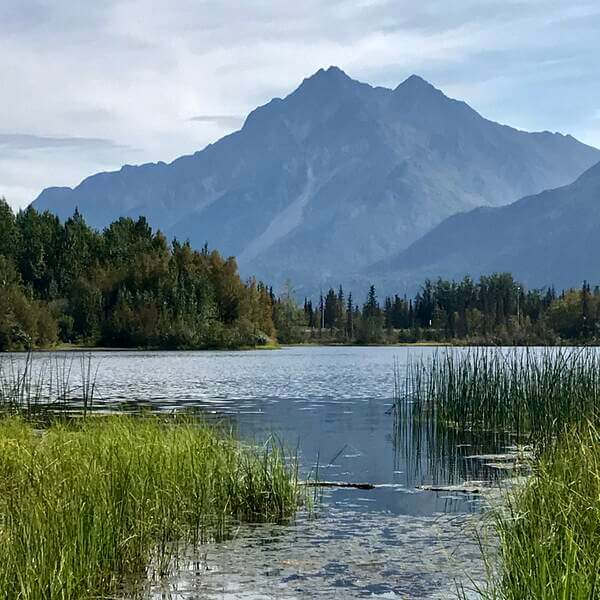 The financial case for Alaska is real and it’s immediate. Alaska has no state income tax and no state sales tax — two of the most significant cost-of-living advantages any state can offer. Beyond that, Alaska residents who meet eligibility requirements receive an annual Permanent Fund Dividend (PFD), a direct payment from the state’s oil wealth fund that has ranged from a few hundred to over two thousand dollars per year depending on fund performance and legislative decisions.
Add employer relocation packages that often cover moving expenses, temporary housing, and sometimes closing cost assistance, and workers arriving in Alaska frequently find themselves in a far stronger financial position than they expected — even accounting for the state’s higher costs on groceries, fuel, and consumer goods. For workers in high-demand fields, sign-on bonuses and geographic pay differentials further sweeten the equation.
The result: many workers who come to Alaska for a job end up staying to build a life. And when that shift happens, the rental-vs-own calculation changes dramatically. Alaska’s housing market rewards ownership, especially in communities like Anchorage, Eagle River, and the Mat-Su Valley where demand from a steady stream of incoming workers keeps inventory tight.
The Three Housing Markets You Need to Know
Anchorage: The Urban Core
Anchorage is home to roughly 40% of Alaska’s entire population and functions as the state’s commercial, medical, and government hub. It’s where JBER is based, where most major hospitals and healthcare employers are concentrated, and where the largest employer base in the state is found.
For workers relocating to Anchorage, the housing market is competitive but navigable. Established neighborhoods like South Anchorage, Hillside, and Midtown offer a range of existing homes, while new construction continues to expand in pockets across the municipality. The tradeoff with buying an existing Anchorage home is the age of the housing stock — many properties were built in the 1970s and 1980s, and Alaska’s extreme climate is not kind to aging structures. Heating systems, windows, roofs, and foundations all require more scrutiny here than in milder states.
Building new in Anchorage eliminates those concerns entirely. A new custom home built to current energy efficiency standards means lower utility costs, no deferred maintenance surprises in year one or two, and a structure designed from the ground up for Alaska’s climate demands. The cost to build in Anchorage is higher per square foot than Wasilla, but the long-term value in a supply-constrained urban market is hard to argue with.
Eagle River: The Commuter Sweet Spot
Eagle River sits about 12 miles northeast of downtown Anchorage, connected by a well-maintained corridor that makes it a practical commute for most Anchorage-based employers. It offers significantly more land per dollar than Anchorage proper, a tight-knit community character, and immediate access to some of the most dramatic hiking and outdoor recreation in the Chugach Mountains.
For workers who want Anchorage employment access without paying Anchorage prices — or who are coming from mid-sized cities and want something that feels more like a neighborhood and less like an urban grid — Eagle River tends to be a natural fit. The area has active new construction, and several builders operating in the region specialize in cold-climate custom homes that can be designed to your timeline and specifications.
Learn more about homes and real estate options in Eagle River in the dedicated community guide.
Wasilla and the Mat-Su Valley: Space, Value, and Growth
Wasilla, Palmer, and the broader Matanuska-Susitna Borough represent Alaska’s fastest-growing residential market. Land is more affordable here than in Anchorage or Eagle River, lots are larger, and the new construction market is robust. The tradeoff is commute time — Wasilla is approximately 45 miles from downtown Anchorage, and the Parks Highway commute during winter conditions is something to model carefully before committing to a property.
For workers whose employer is located in or near the Valley, or who work remotely, Wasilla offers compelling value. The cost comparison between building in Wasilla vs. Anchorage shows meaningful differences in land cost and construction pricing that can make a significant impact on what you’re able to build for your budget. Some of Alaska’s most experienced custom home builders operate in this corridor, including those featured in the top builders in Wasilla guide.
Buy Existing vs. Build New: What Relocating Workers Should Consider
 This is the central decision, and the answer is different for Alaska than it is in most of the Lower 48.
The case for buying existing is speed and simplicity. If you’re arriving on a short timeline, relocating with a family, and need to be settled before a school year starts, an existing home lets you close in 30–45 days rather than waiting through a 6–12 month build process. In a tight market, though, existing inventory can be limited — and as mentioned, Alaska’s older housing stock requires due diligence that goes beyond a standard inspection in warmer states.
The case for building new is stronger in Alaska than almost anywhere else in the country, for three specific reasons. First, Alaska’s climate demands are severe enough that the energy efficiency and insulation performance of a new home — built to current Alaska Housing Finance Corporation (AHFC) standards — delivers measurable savings on heating costs every single year. Second, new construction lets you design for Alaska’s lifestyle: mudrooms built for gear storage, heated garages, optimal floor plans for cold climates, and mechanical systems chosen for reliability in extreme temperatures. Third, with a custom build, you’re not inheriting someone else’s deferred maintenance — a meaningful consideration when that maintenance might include a failing boiler in January.
The hidden costs of building in Alaska guide is required reading before you finalize any budget, as several Alaska-specific line items — including soil testing, permafrost assessment, and utility hookup costs on rural lots — don’t show up in standard construction estimates.
Alaska-Specific Housing Factors Every Relocating Worker Needs to Know
Heating costs are a major budget line. Unlike most of the Lower 48 where heating is a minor monthly expense, Alaska heating costs can run $300–$600+ per month through the long winter in an older, poorly insulated home. A new home built to AHFC energy standards can cut that significantly. Understanding the heating system — fuel oil, natural gas, propane, or a heat pump — and its efficiency rating before you buy or build is essential.
The Permanent Fund Dividend affects your tax picture. Once you establish Alaska residency (one year of physical presence with intent to remain), you become eligible for the annual PFD. This is real money that many newly arrived workers don’t factor into their first-year financial planning.
Soil conditions vary enormously. In Anchorage and Eagle River, soil conditions are generally stable and well-documented. In parts of the Mat-Su Valley and any rural land, permafrost, high groundwater, or unstable soils can add significantly to foundation costs. The guide to building on permafrost and the land buying due diligence checklist are essential reading if you’re considering any lot outside an established subdivision.
Snow load is a structural design issue, not just an inconvenience. Alaska homes must be engineered to handle roof snow loads that would be catastrophic on a standard Lower 48 structure. This is standard practice for reputable Alaskan builders — but worth confirming explicitly if you’re buying an older home or using a builder without strong local experience. The snow load roof design guide covers what to look for.
Starting Your Alaska Home Search from Out of State
Most workers relocating to Alaska begin their home search before they arrive — and with the right builder or agent, that’s entirely manageable. Modern virtual tools, detailed video walkthroughs, and Alaska-experienced professionals who are used to working with out-of-state clients make it possible to narrow your shortlist, understand your options, and even begin a build process before your first in-person trip.
The key is working with people who build and sell specifically in Alaska — professionals who understand the climate demands, the local permitting environment, the seasonal construction windows, and the financing landscape unique to this state. The guide to choosing the right custom home builder in Alaska is a practical framework for evaluating your options, and the top questions to ask your builder before signing anything are worth having in front of you for any builder conversation.
Alaska is a place that rewards preparation. Workers who arrive knowing what they want, where they want to be, and what Alaska-specific factors to watch for have a dramatically smoother path to homeownership than those who figure it out after landing. This guide is your starting point — the resources linked throughout will take you deeper into each decision you’ll face.
